



Empowering Third-Party Sellers to Thrive on AshleyFurniture.com
Ashley Market Platform (AMP)
AMP represents a major evolution in Ashley Furniture’s digital commerce ecosystem—designed to empower third-party sellers with the tools, insights, and flexibility to manage their storefronts on AshleyFurniture.com.
While currently in development, AMP showcases the strategic vision of a unified marketplace that combines real-time analytics, AI-driven pricing, and streamlined operations into a single, intuitive platform.
This project marked an exciting milestone in my design journey, as I tested Adobe XD for the first time—expanding my toolkit of Figma and Axure RP to explore new wireframing tool.
Business Requirements vs User Needs
| Business Requirement | User Needs |
| Provide a backend system for third-party sellers to manage products, pricing, and orders. | Effortlessly add, edit, and monitor products across Ashley’s retail ecosystem. |
| Integrate real-time analytics and reporting. | Access live performance data to make timely business decisions. |
| Support AI-driven pricing automation (PPMA). | Optimize pricing without constant manual adjustments. |
| Enable storefront customization and advertising placement. | Maintain brand identity and reach customers through strategic promotions. |
| Provide training and support through AMP University. | Learn and onboard efficiently through self-paced tutorials and videos. |
| Include customer care and performance tracking. | Manage reviews, ratings, and communication to maintain reputation. |
Project Goal
To design a scalable marketplace platform where vendors can manage every aspect of their business—from catalog setup to customer engagement—within a cohesive, data-driven experience that reflects Ashley’s brand standards and customer trust.
Research & Approach
- Fragmented tools and inconsistent analytics.
- Lack of transparency in pricing competition.
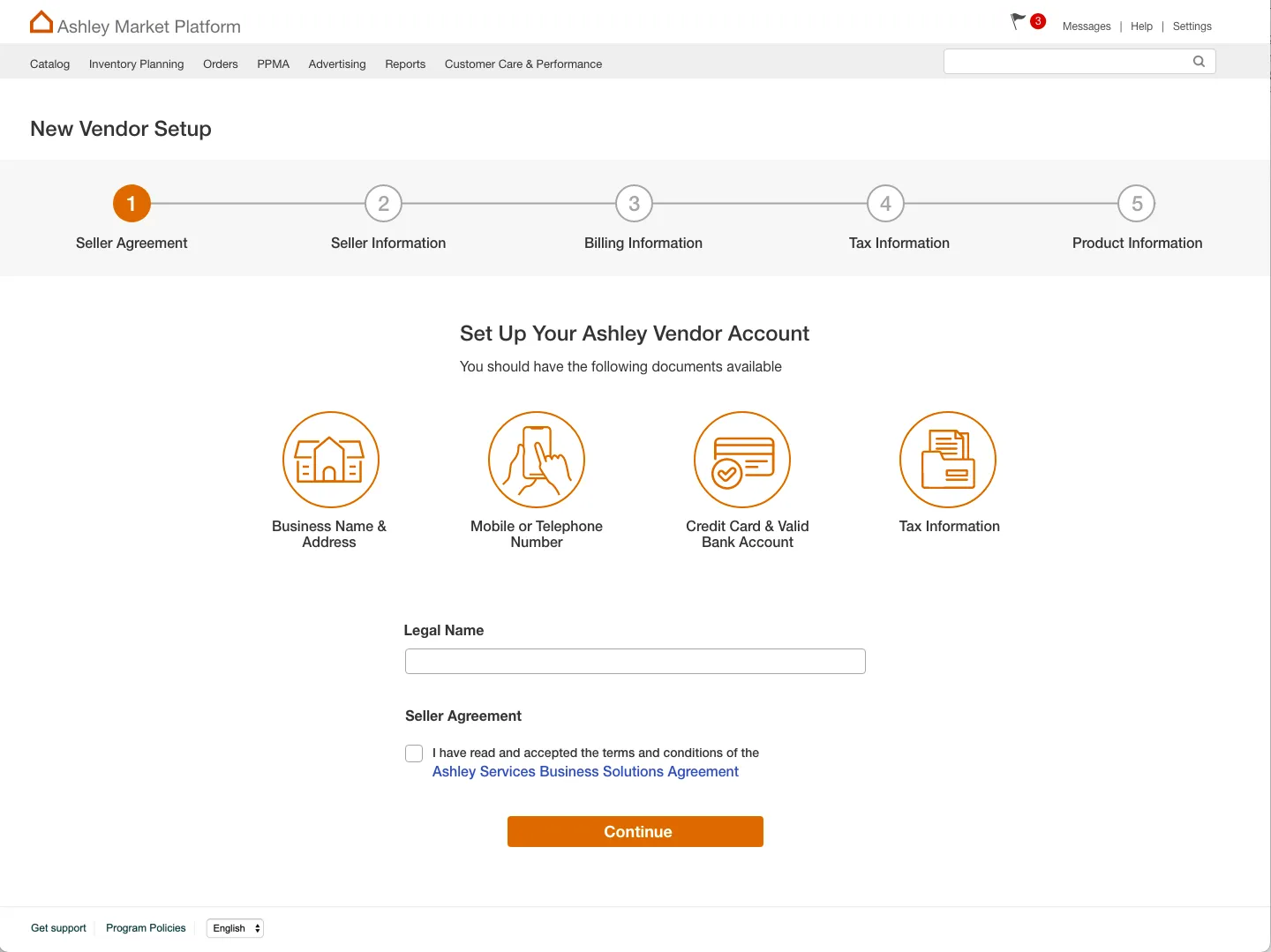
- Complex onboarding processes for new sellers.
Drawing inspiration from platforms like Amazon Seller Central and Shopify, I set out to craft an experience that balanced power and simplicity—an enterprise-grade tool wrapped in a friendly, learnable interface.
Design Exploration
Key Modules Designed
- Catalog: End-to-end product management and storefront curation.
- Inventory Planning: Real-time stock visibility and logistics coordination.
- Orders: Centralized management for customer orders and fulfillment.
- PPMA (Profit Pricing Market Automation): Algorithmic pricing control with adjustable parameters.
- Advertising: Dynamic campaign tools for self-promotion or sponsored placements.
- Reports: Customizable dashboards for revenue, traffic, and conversion data.
- Customer Care & Performance: Customer sentiment tracking, reviews, and response metrics.

AMP University
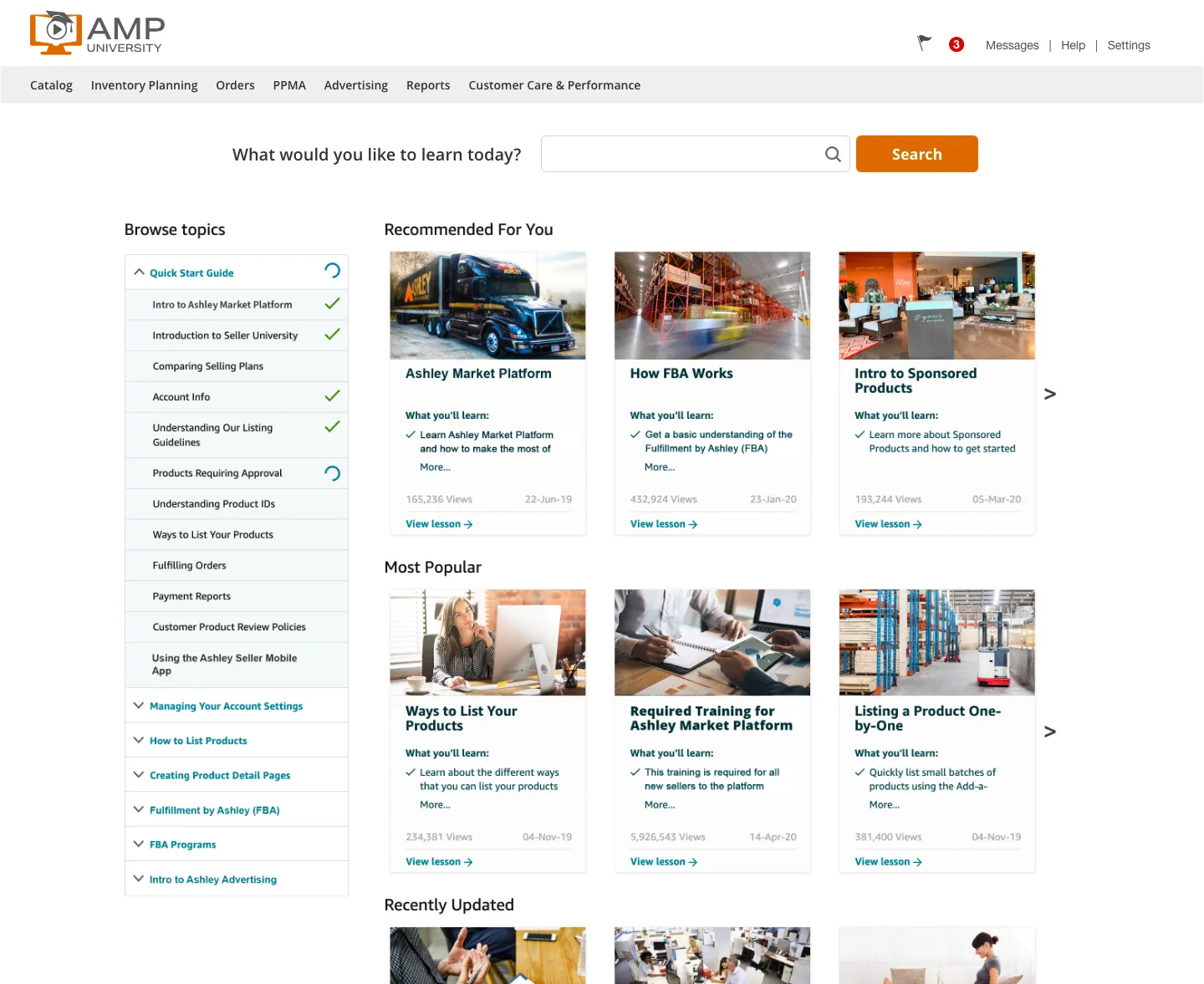
AMP University was designed as the learning hub for new vendors—featuring interactive guides, tutorials, and training videos. The goal was to reduce onboarding friction while promoting platform mastery.
Its modular structure mirrored an e-learning experience, allowing users to explore topics at their own pace, from “Setting Up Your Storefront” to “Mastering Profit Pricing Automation.”
Ashley Market Inspector
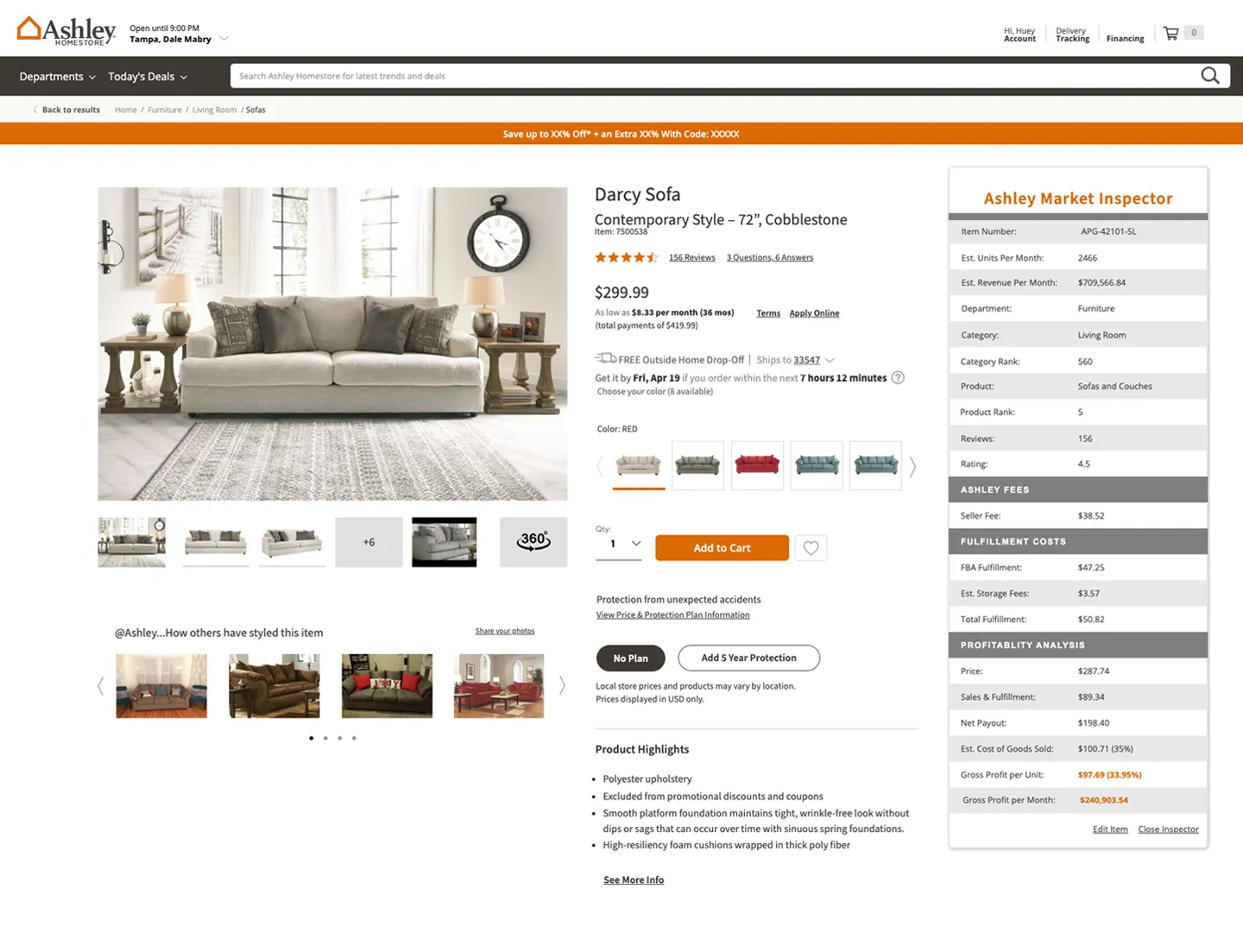
One of AMP’s most forward-thinking features, the Ashley Market Inspector, integrates directly on the product detail page. Using AI-driven insights, it provides real-time market comparisons, pricing trends, and competitor benchmarks—all without leaving the sales context.
Learnings
AMP reinforced the importance of designing for ecosystems, not isolated products. Balancing user autonomy, analytics depth, and business goals required a systems-thinking mindset—one that blends commerce logic and user empathy.
It also underscored the value of continuous learning—whether adopting new design tools or exploring emerging AI applications in pricing automation.
Conclusion
The Ashley Market Platform remains one of the most forward-thinking initiatives in Ashley’s digital roadmap.
With features like AI-driven pricing, customizable storefronts, and live performance metrics, AMP demonstrates the future of marketplace enablement—a vision built on empowerment, insight, and innovation.
AMP may still be in development, but its design foundation lights the path for what’s next in enterprise retail UX.